


Tired of WooCommerce Plugin Bloat? 4 Clean Open-Source E-Commerce Platforms

BeikeShop Official Website: beikeshop.com
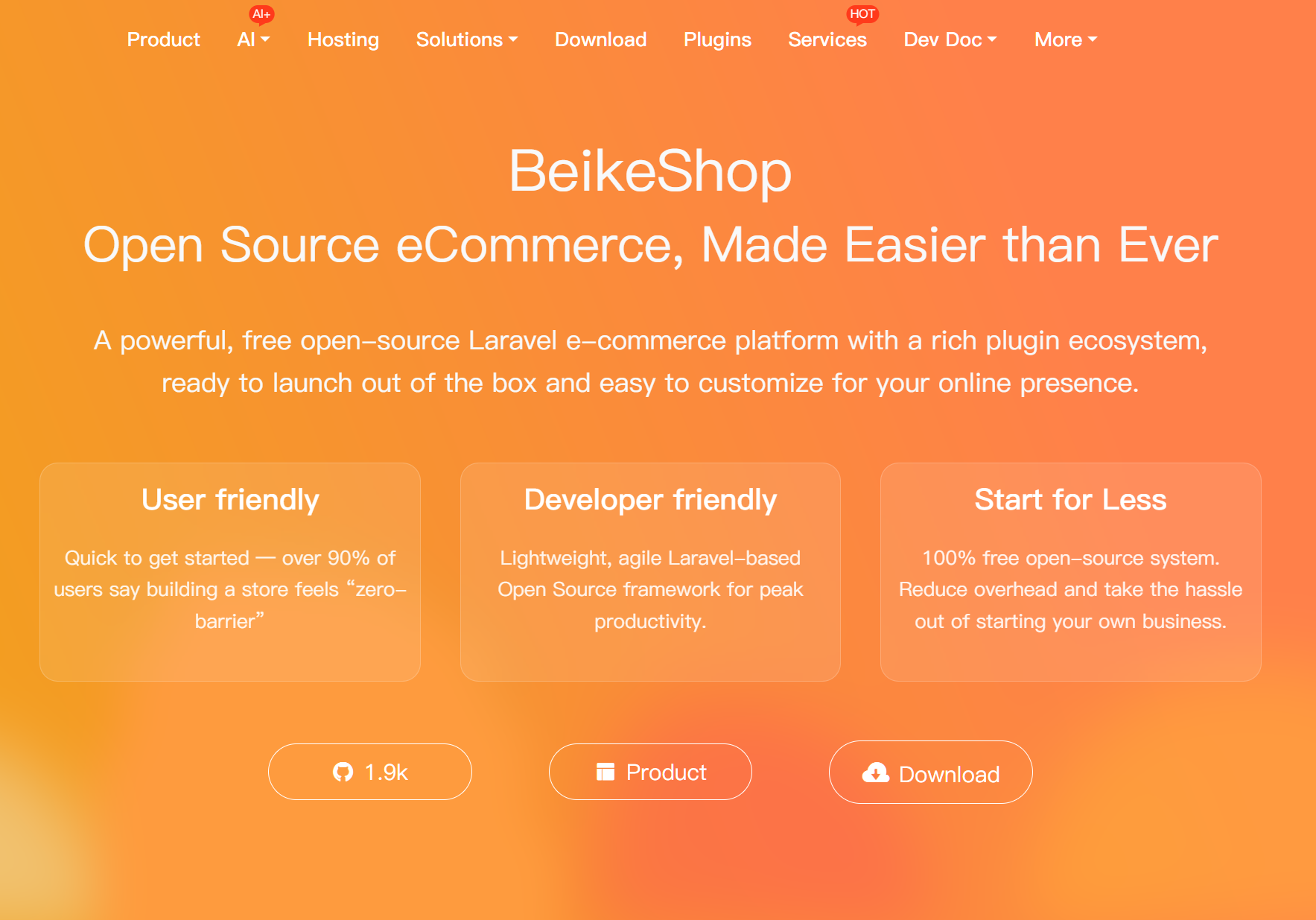
BeikeShop is a premier open-source e-commerce system built on the Laravel framework. Specifically designed for cross-border trade, it offers a fully customizable, multi-language, and multi-currency solution for businesses looking to scale their independent global storefronts.
Open your WooCommerce admin dashboard and count how many plugins you have installed. 10? 20? 30?
Now ask yourself:
- When was the last time a plugin conflict broke your website?
- When was the last time a plugin security update gave you anxiety?
- When was the last time your site took over 3 seconds to load because of too many plugins?
If these questions make you uncomfortable—you are not alone.
There is a long-overlooked problem in the e-commerce software space: most systems break essential "core features" into separate plugins, forcing you to stack dozens of plugins just to run a normal store.
But now, a wave of "clean" e-commerce platforms has chosen a different path: built-in core features, with plugins reserved for enhancements. Today, we'll recommend 4 such systems.
1. The True Cost of "Plugin Hell"
Before diving into the recommendations, let's look at the real drawbacks of plugin stacking.
1. Exponentially Higher Security Risks
Every plugin is extra code, and every line of code can contain vulnerabilities.
According to security reports from Wordfence:
- Over 50% of WordPress security incidents are tied to third-party plugins.
- A site with 30 plugins is 6 times more likely to be attacked than a site with 5 plugins.
- The average delay for applying plugin updates is 23 days—leaving your site exposed to known vulnerabilities during that window.
2. Continuous Performance Degradation
Each plugin loads extra CSS, JavaScript, and database queries.
A typical WooCommerce performance breakdown:
Initial setup (5 plugins): Page load 1.5s
+ 5 marketing plugins → 2.3s
+ 5 analytics plugins → 3.1s
+ 5 feature plugins → 4.5s
+ 5 "widget" plugins → 6.2s
Google data shows: Every 1-second delay in page load time reduces conversions by 7%.
3. Maintenance Costs Spiraling Out of Control
Every time WordPress updates its core or PHP upgrades, you have to verify compatibility across all your plugins.
- One incompatible plugin → can cause a total site WSOD (White Screen of Death).
- A conflict between two plugins → can suddenly break a critical feature.
- An abandoned plugin → forces you to find a replacement and migrate data.
Plugin management consumes an immense amount of your time.
2. What Defines a "Clean" E-Commerce System?
"Clean" isn't just about having "fewer plugins." A truly clean e-commerce system should satisfy:
1. Built-in Core Features Payments, shipping, multi-language, multi-currency, SEO, and customer management—these are foundational e-commerce requirements, not "value-added add-ons." They should work out of the box.
2. Clean Code Architecture You shouldn't have to dig through dozens of plugin source files just to make a small tweak. Core logic should be centralized and predictable.
3. Plugins for Enhancement, Not Gaps The purpose of a plugin marketplace should be value-add enhancements (e.g., AI analytics, advanced reporting), not basic gap-filling (e.g., adding essential payment gateways).
4. Upgrades Without Multi-Plugin Coordination A system upgrade is just a system upgrade, without needing to verify compatibility across 30 separate plugins.
By these standards, here are 4 truly "clean" e-commerce systems.
3. 4 Recommended Clean E-Commerce Systems
1. BeikeShop — The Cleanest All-in-One Solution
Core Philosophy: All essential e-commerce features built right in.
Out-of-the-Box Features:
| Feature | Status |
|---|---|
| Multiple Payments (PayPal / Stripe / Alipay / WeChat Pay) | ✅ Built-in |
| Multi-Language (80+ language packs) | ✅ Built-in |
| Multi-Currency + Auto Exchange Rate Updates | ✅ Built-in |
| SEO Tools (URL Rewriting / Sitemap / Meta) | ✅ Built-in |
| Shipping Management + Rate Templates | ✅ Built-in |
| Customer Management + Membership Levels | ✅ Built-in |
| Order Management + After-Sales Workflow | ✅ Built-in |
| Marketing Tools (Coupons / Flash Sales) | ✅ Built-in |
| AI Agent System | ✅ Built-in |
What is the Plugin Marketplace for? Exclusively for enhancement features:
- AI order analytics and insights
- Product scraper tools
- ERP integrations
- Custom functional requests
Why is it "Clean"?
- No reliance on plugins to plug basic functional gaps
- Built on Laravel with a clean and predictable architecture
- System updates don't require checking plugin compatibility
- Run a complete e-commerce store without installing a single plugin
Best For: Sellers and teams who want to avoid plugin hassle and prefer stability and peace of mind.
2. Bagisto — The Clean Choice for Developers
Core Philosophy: Handling e-commerce complexity with Laravel's elegance.
Out-of-the-Box Features:
| Feature | Status |
|---|---|
| Multi-Store Management | ✅ Built-in |
| Multi-Language + Multi-Currency | ✅ Built-in |
| Multiple Payment Gateways | ✅ Built-in |
| Product Management (with Multi-Variants) | ✅ Built-in |
| Customer Management + CRM | ✅ Built-in |
| Content Management (CMS Pages) | ✅ Built-in |
| Responsive Front-End | ✅ Built-in |
Why is it "Clean"?
- High code quality built on Laravel + Vue.js
- Admin panel is an independent SPA, immune to WordPress-style plugin conflicts
- Extensions are structured as standard Laravel Packages
- MIT license with zero restrictions
What do plugins add?
- Multi-vendor marketplace
- POS systems
- Booking/Reservation systems
- LMS course systems
Best For: Tech teams with Laravel experience looking for clean code and strong architecture.
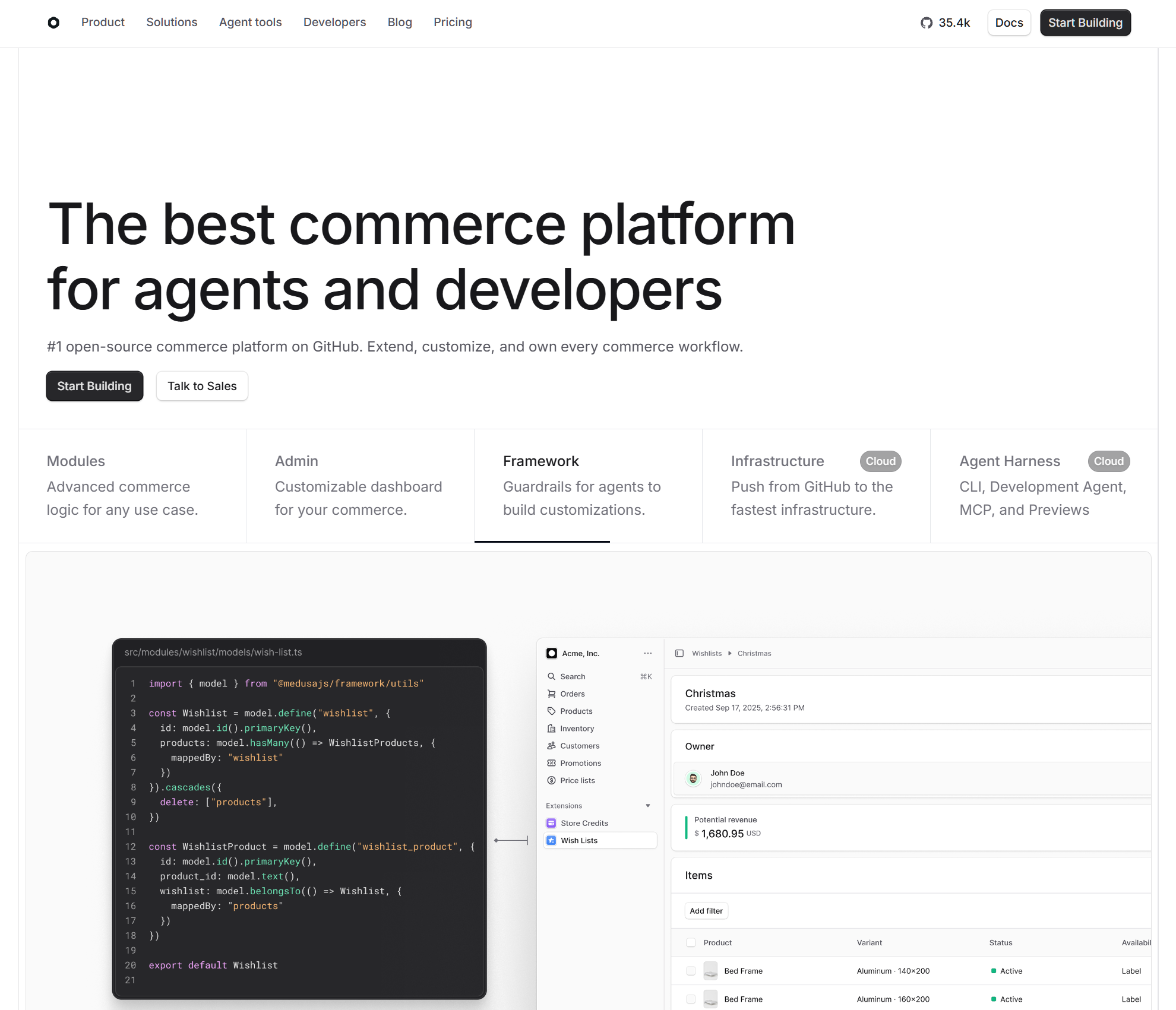
3. Medusa.js — The Clean Solution for the Headless World
Core Philosophy: Complete decoupling of front and back-end, acting purely as an e-commerce engine.
Out-of-the-Box Features:
| Feature | Status |
|---|---|
| Product Management API | ✅ Built-in |
| Order Management API | ✅ Built-in |
| Customer Management API | ✅ Built-in |
| Cart / Checkout API | ✅ Built-in |
| Payment Integration Framework | ✅ Built-in |
| Multi-Region / Multi-Currency | ✅ Built-in |
Why is it "Clean"?
- Fully headless with zero front-end template bloat
- Node.js tech stack with modular design
- Extremely lean core focused strictly on the e-commerce engine
- Complete freedom over front-end choices (Next.js, React, Vue, etc.)
Ideal Scenarios:
- Need a fully custom front-end experience
- Have a dedicated front-end development team
- Multi-channel deployments (App + Web + Mini Programs)
Best For: Tech-driven teams requiring ultimate front-end customization.
4. Saleor — Clean Headless for the Python Ecosystem
Core Philosophy: GraphQL-driven, enterprise-grade headless e-commerce.
Out-of-the-Box Features:
| Feature | Status |
|---|---|
| GraphQL API | ✅ Built-in |
| Product Management | ✅ Built-in |
| Order Management | ✅ Built-in |
| Customer Management | ✅ Built-in |
| Payment Integration | ✅ Built-in |
| Multi-Channel Sales | ✅ Built-in |
Why is it "Clean"?
- Excellent code organization powered by Django + GraphQL
- Fully headless, offering total front-end flexibility
- Admin dashboard built with React, open for custom development
- BSD license, commercially friendly
Ideal Scenarios:
- Teams with a Python tech stack
- Require enterprise-grade API capabilities
- Multi-channel / multi-touchpoint sales strategies
Best For: Python engineering teams building enterprise-grade headless projects.
4. Comparison Table
| Dimension | BeikeShop | Bagisto | Medusa.js | Saleor |
|---|---|---|---|---|
| Type | Full-featured monolithic | Full-featured monolithic | Headless Engine | Headless Engine |
| Tech Stack | Laravel (PHP) | Laravel (PHP) | Node.js | Python / Django |
| Core Features Built-in | ✅ Fully Built-in | ✅ Basic Essentials | ✅ API Layer | ✅ API Layer |
| Front-End Interface | Built-in (Customizable) | Built-in (Customizable) | Self-built required | Built-in Dashboard |
| Zero-Plugin Operation | ✅ Fully Capable | ✅ Mostly Capable | ✅ Fully Capable | ✅ Fully Capable |
| AI Features | ✅ Native | ❌ | ❌ | ❌ |
| Chinese Language Support | ✅ Native | ⚠️ Basic | ❌ None | ❌ None |
| Learning Curve | Easy | Moderate | Higher | Higher |
| Target Teams | Cross-border sellers / SMBs | Tech teams / Agencies | Front-end teams | Enterprise tech teams |
5. How to Choose?
Choose BeikeShop if you:
- Are a PHP / Laravel developer
- Want a ready-to-use, complete e-commerce store right out of the box
- Run a cross-border business needing multi-language and Chinese support
- Value built-in AI features to boost operational efficiency
Choose Bagisto if you:
- Are a PHP / Laravel developer
- Need a clean code structure and elegant architecture
- Work on client projects requiring flexible customizations
Choose Medusa.js if you:
- Have a dedicated Node.js front-end team
- Seek the ultimate flexibility of a headless architecture
- Build across multiple platforms (Web + App + Mini Programs)
Choose Saleor if you:
- Have a Python / Django tech team
- Require enterprise-grade GraphQL APIs
- Manage medium-to-large multi-channel retail projects
Conclusion
"Plugin Hell" isn't just a technical problem—it's a design choice.
Some platforms choose to keep the core bare-minimum and push essential features into plugins, trapping you in an endless cycle of plugin bloat.
The 4 systems above took a different path: building essential features directly into the core, allowing plugins to serve their true purpose—enhancement.
If you are tired of plugin conflicts, security worries, and performance drag, it's time to try a "clean" e-commerce system.
Among them, BeikeShop offers the lowest barrier to entry—it's free, full-featured, AI-powered, and multi-language friendly. You can install it and start selling immediately without needing 30 plugins first.
Welcome to contact us! Email: marketing@guangda.work
Click the link to learn about the product: https://beikeshop.com/
All rights reserved. Reprint must indicate the source!