


From Merchant Onboarding to Fulfillment: How Can a B2B2C Multi-Vendor Platform Build a Complete Operating Loop?
BeikeShop Official Website: beikeshop.com
BeikeShop is a premier open-source e-commerce system built on the Laravel framework. Specifically designed for cross-border trade, it offers a fully customizable, multi-language, and multi-currency solution for businesses looking to scale their independent global storefronts.
Many people assume that building a multi-vendor platform simply means inviting more merchants and listing more products.
Once operations begin, however, the real challenges quickly emerge. How should merchants be reviewed? How can each store establish its own identity? How should products be governed? When one customer buys from several merchants in a single checkout, how can orders and fulfillment stay organized? And how should merchant funds be managed?
For a sustainable B2B2C platform, the key is not the number of stores. It is whether the platform can build a complete operating loop from merchant onboarding to fulfillment.
BeikeShop Multi-Vendor System is built for exactly these scenarios. It supports self-operated, merchant-onboarding, and hybrid operating models, helping platform owners launch their own multi-vendor e-commerce sites while enabling the platform, merchants, and shoppers to work efficiently together.
Step 1: Establish a Reliable Merchant Onboarding and Review Process
For a platform, more merchants do not necessarily mean better merchants. The priority is attracting merchants who fit the platform.
BeikeShop supports online merchant registration and onboarding. Once an application is submitted, the platform can review it in the main admin panel, edit merchant information, and group merchants according to operational needs.
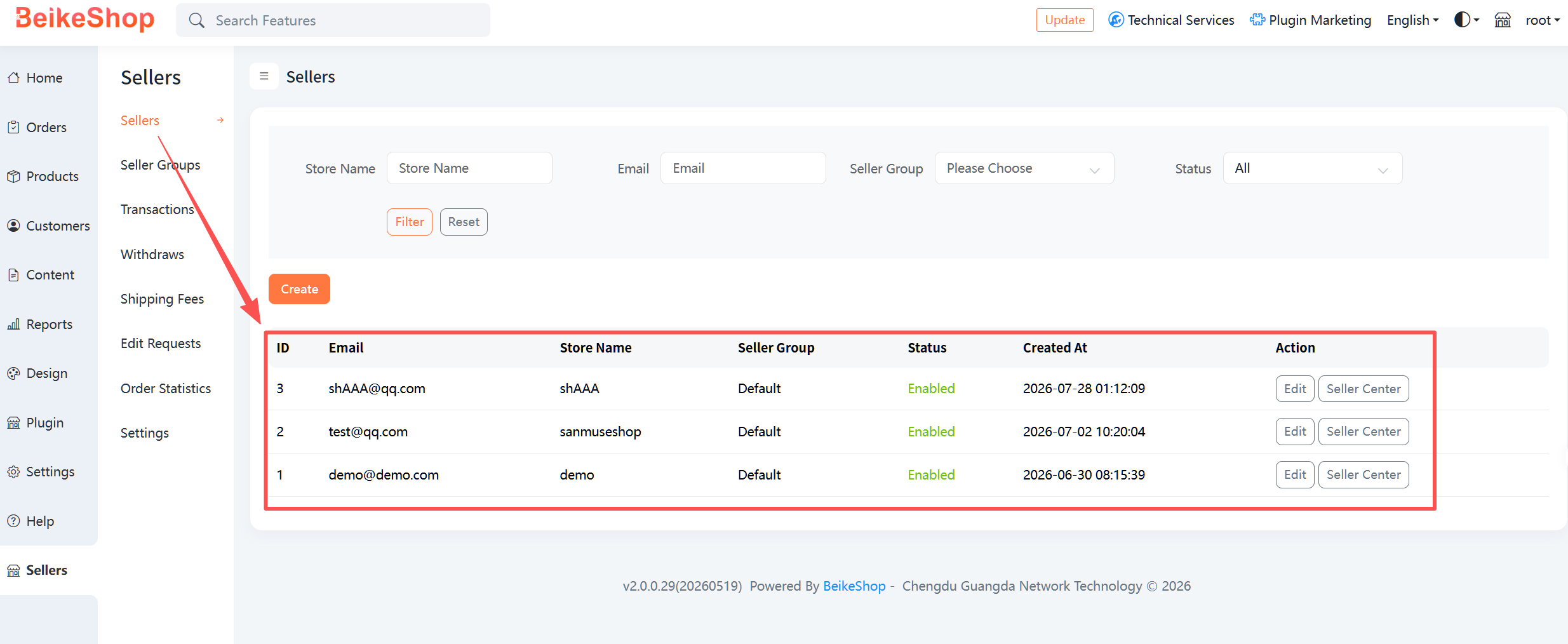
This gives the platform a more refined way to manage merchants by category, region, partnership tier, or service capability.
Whether the business is a cross-border platform for overseas sellers, a regional marketplace for local retailers, or a vertical marketplace focused on a particular industry, it can first define its own onboarding rules and then expand its merchant ecosystem step by step.
Step 2: Give Every Merchant a Store, Not Just a Shared Shelf
After joining a platform, merchants need an independent space to operate—not merely a thin product listing inside a larger marketplace.
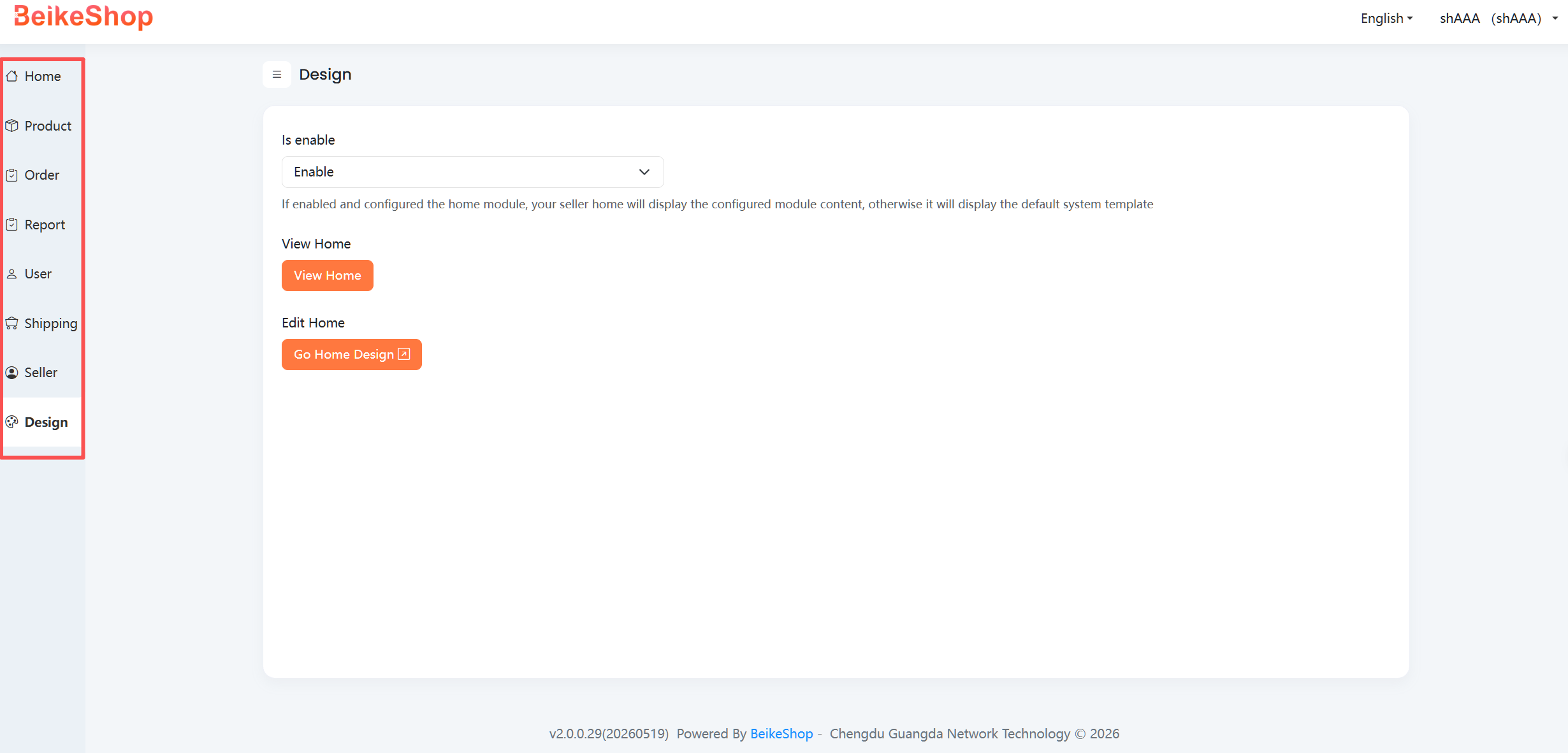
BeikeShop can assign an independent subdomain to each merchant. Merchants can configure their store names and domain names, giving every store a clearer brand identity.
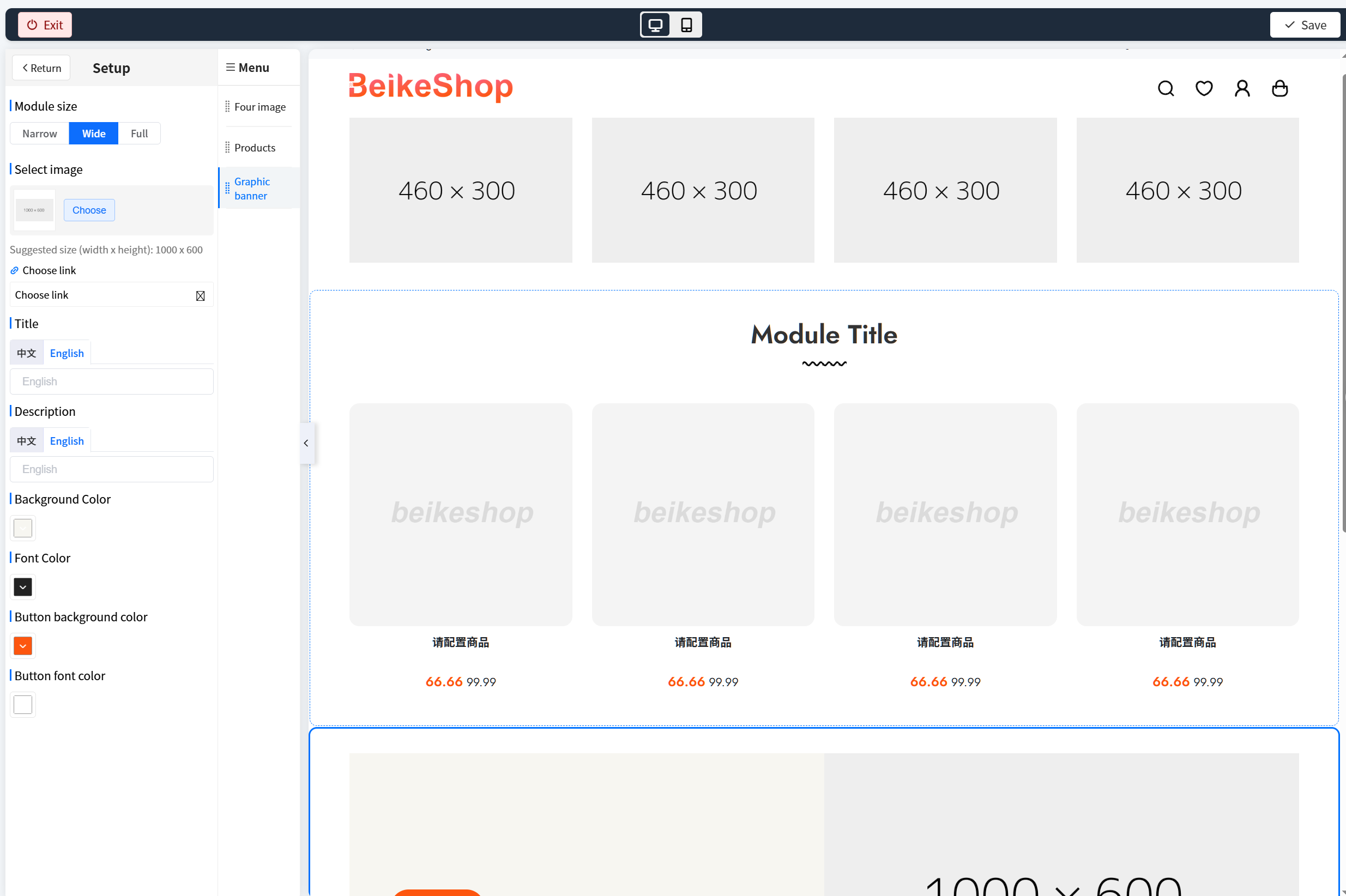
Merchants can also use the store homepage editor to present their brand information, featured products, and store content. For multi-brand collections, vertical marketplaces, and regional commerce platforms, this independence increases merchant engagement and helps shoppers build trust in individual stores.
Unified platform operations do not mean every merchant has to look the same.
Step 3: Let Merchants Manage Products While the Platform Retains Governance
As a platform’s product catalog grows, the management challenge grows with it.
In BeikeShop, merchants can publish, edit, and manage products through their own admin panels. The platform can decide, based on its operating strategy, whether merchant-submitted products require review before publication.
This provides a practical balance:
- Established merchants can operate products more independently and efficiently.
- New merchants or new categories can be reviewed first.
- The platform can maintain consistent product standards and content governance.
Merchants do not need to wait for the platform to operate every product for them, and the platform does not need to give up control over product quality. Each side can work within its own responsibilities, allowing the catalog to grow more steadily.
Step 4: Automatically Split Multi-Vendor Orders for Clearer Fulfillment
When shoppers buy from a platform, they are not primarily concerned with which store owns each item. They care about smooth checkout, timely delivery, and clear after-sales service.
But when a single order contains products from several merchants, platforms can easily face order confusion, delayed fulfillment, and unclear responsibilities.
BeikeShop supports automatic order splitting based on product ownership. After a shopper checks out once, the system assigns the relevant orders to the respective merchants so each merchant can promptly see its own orders and arrange fulfillment.
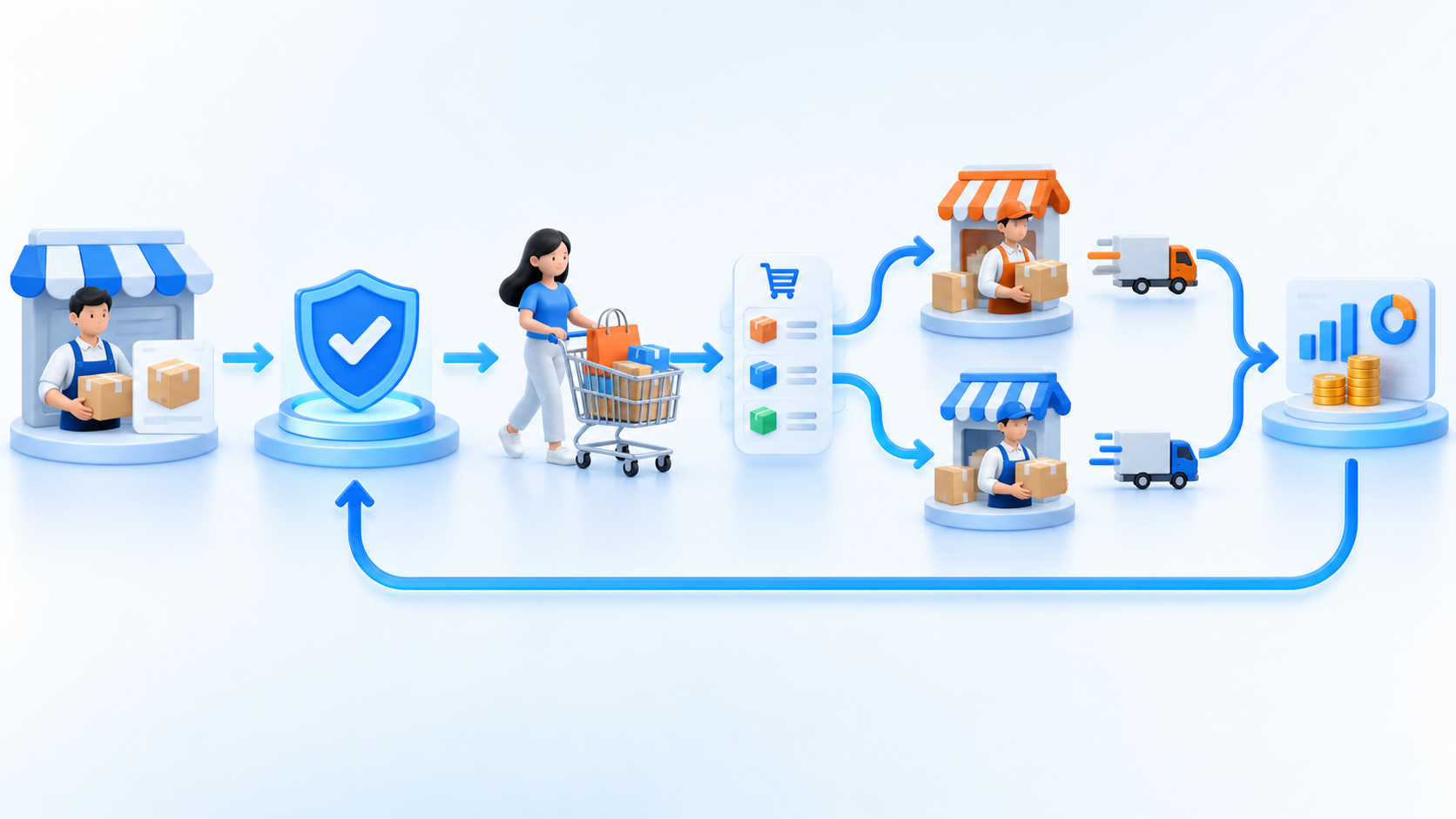
Merchants can also manage shipping, return, and exchange requests, and configure shipping rules based on their needs.
For shoppers, the buying journey remains unified. For merchants, the fulfillment workflow is clear. For the platform, orders no longer require repeated manual reconciliation.
This is the foundation a multi-vendor platform needs to scale.
Step 5: Keep Funds and Data Clear for Sustainable Operations
After onboarding, merchants care about more than orders—they also care about funds.
BeikeShop enables merchants to view account balances and request withdrawals, while the platform can review and manage withdrawal requests. This gives merchants visibility into their revenue while allowing the platform to maintain the necessary control over fund flows.
In addition, the merchant admin panel provides order statistics reports to help merchants understand their performance. The platform can use the main admin panel to oversee merchants, products, orders, and overall operations.
For a B2B2C platform, the goal is not simply to collect more data. It is to ensure that both the platform and its merchants can access the information they need and use it to make better operating decisions.
Self-Operated, Merchant Onboarding, or Hybrid: Do Not Let One Model Limit Growth
Different stages of a platform call for different operating models.
At the beginning, a platform may use self-operated products to build a customer base. As the business grows, it can bring in third-party merchants to expand product categories quickly. Once it has stable supply-chain and merchant resources, it can operate a hybrid model that combines self-operated business with onboarded merchants.
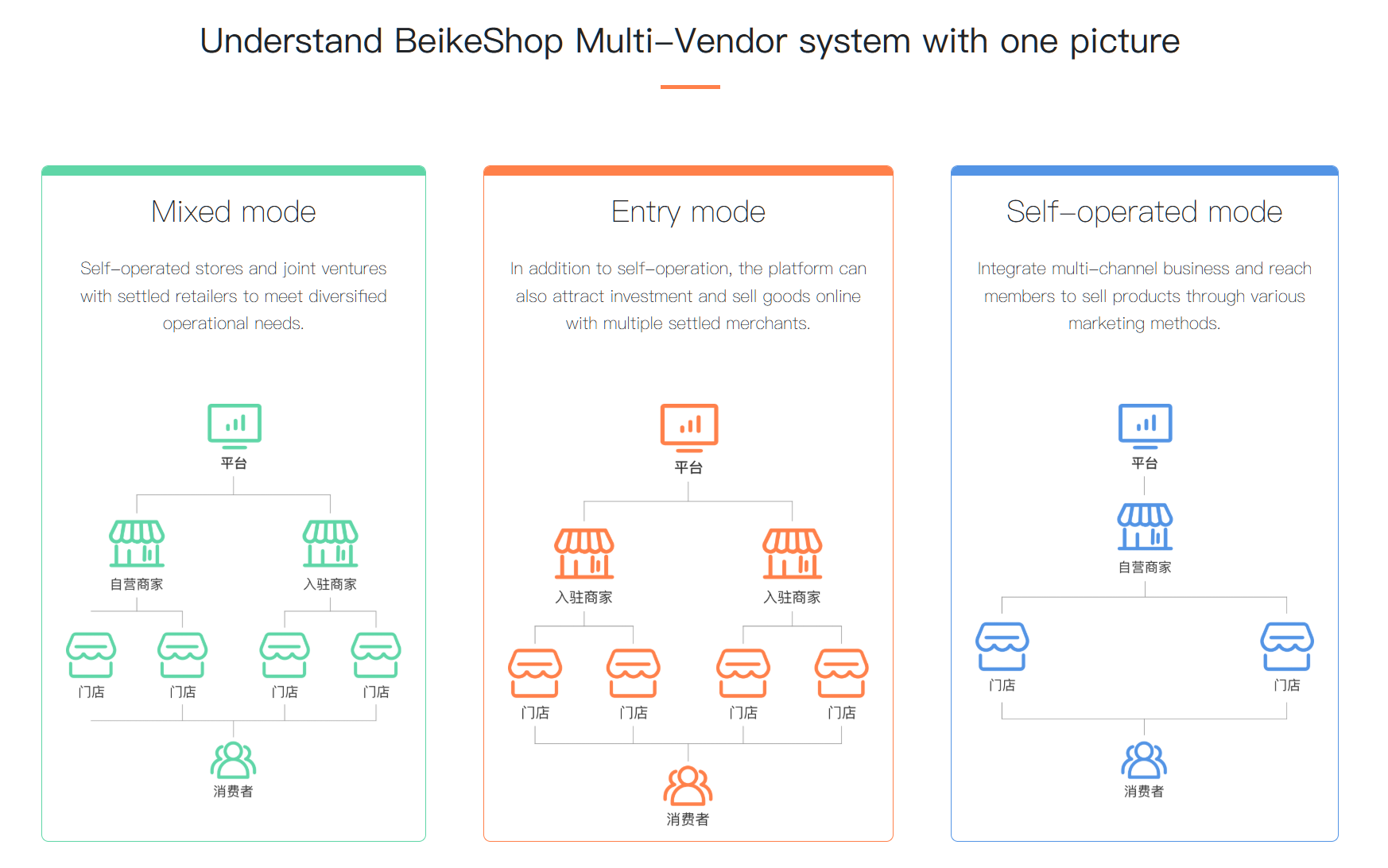
BeikeShop supports all three models, enabling platforms to adjust as the business develops instead of being constrained by a fixed model from day one.
This flexibility is especially valuable for teams planning vertical marketplaces, regional e-commerce platforms, cross-border B2B2C platforms, or multi-brand stores.
You Are Building More Than a Multi-Store System—You Are Building Platform Capability
A genuinely valuable multi-vendor system should enable the platform to onboard merchants, merchants to operate independently, and shoppers to purchase smoothly.
Built on open-source code and data ownership, BeikeShop supports multilingual operations and provides merchant onboarding, product review, independent stores, automatic order splitting, shipping settings, withdrawal management, and operating reports. These capabilities help platforms gradually build their own supply-chain and merchant ecosystems.
Launching once is not merely about adding more merchant stores. It is about preparing a stronger operating foundation for future growth.
If you are planning a B2B2C multi-vendor platform, explore BeikeShop Multi-Vendor System and experience the storefront, merchant admin panel, and main admin panel:
👉 Explore BeikeShop Multi-Vendor System
Welcome to contact us! Email: marketing@guangda.work
Click the link to learn about the product: https://beikeshop.com/
All rights reserved. Reprint must indicate the source!