


Multi-Origin Shipping: Accurate Cross-Border Rates | BeikeShop

BeikeShop Official Website: beikeshop.com
BeikeShop is a premier open-source e-commerce system built on the Laravel framework. Specifically designed for cross-border trade, it offers a fully customizable, multi-language, and multi-currency solution for businesses looking to scale their independent global storefronts.
For cross-border e-commerce businesses, shipping is a meaningful part of order cost. As operations expand into Europe, North America, Africa, South Asia, and other markets, merchants often establish regional or overseas warehouses. Shipping costs can vary by market, warehouse, and product mix.
The BeikeShop Multi-Origin Shipping plugin is designed for this multi-region fulfilment model. By combining target-market zone groups, shipping origins, and rate rules, it matches the appropriate warehouse shipping cost. When an order involves more than one shipping origin, it calculates each group separately and then combines the amounts—making shipping charges more accurate and closer to real fulfilment costs.
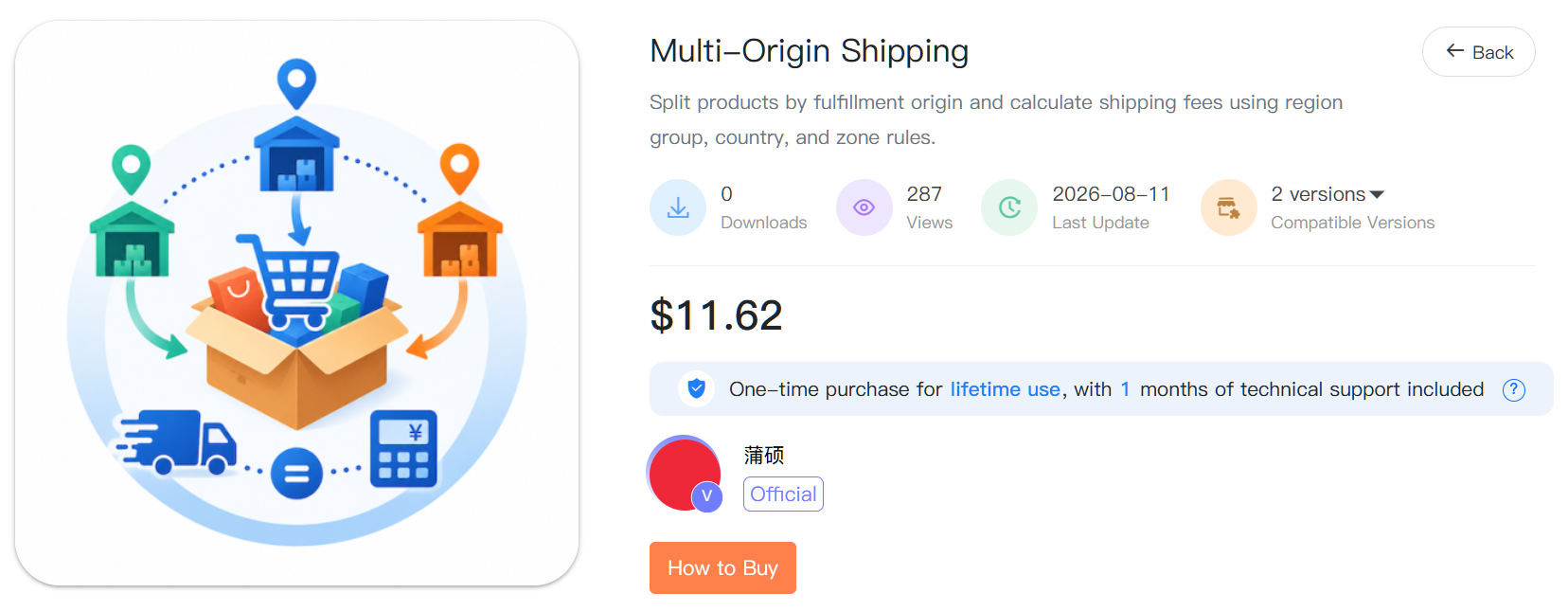
Plugin details: Multi-Origin Shipping – Multi-Warehouse and Multi-Origin Management
Is Multi-Origin Shipping Right for Your Store?
This plugin helps cross-border merchants calculate shipping more accurately when they need to:
- Fulfil products from regional or overseas warehouses such as Europe, North America, Africa, or South Asia;
- Match different target markets with different warehouses and shipping rates;
- Process orders containing products from multiple warehouses;
- Make shipping calculations reflect actual fulfilment routes and operating costs.
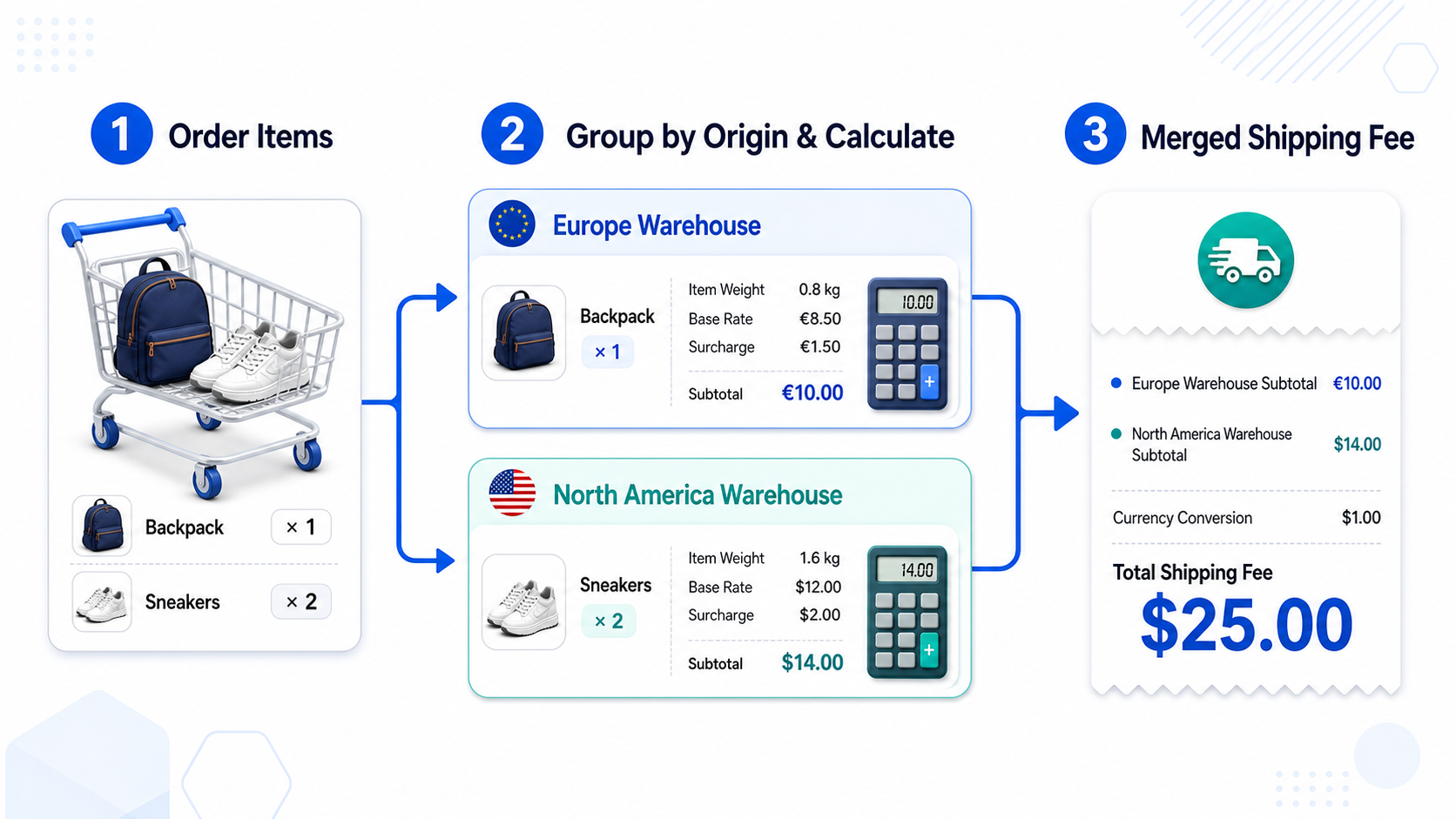
For example, a merchant can map European markets to a Europe warehouse and North American markets to a North America warehouse, then set different base rates, per-item surcharges, and free-shipping thresholds for their respective zone groups. At checkout, the system matches the customer's target market with the relevant zone group and warehouse rule to calculate shipping according to the actual fulfilment plan. When an order involves multiple origins, each group is calculated and then combined.
Core Capabilities: Match Regional Warehouses to Target Markets and Calculate Precisely
1. Manage Multiple Shipping Origins with a Default Fallback
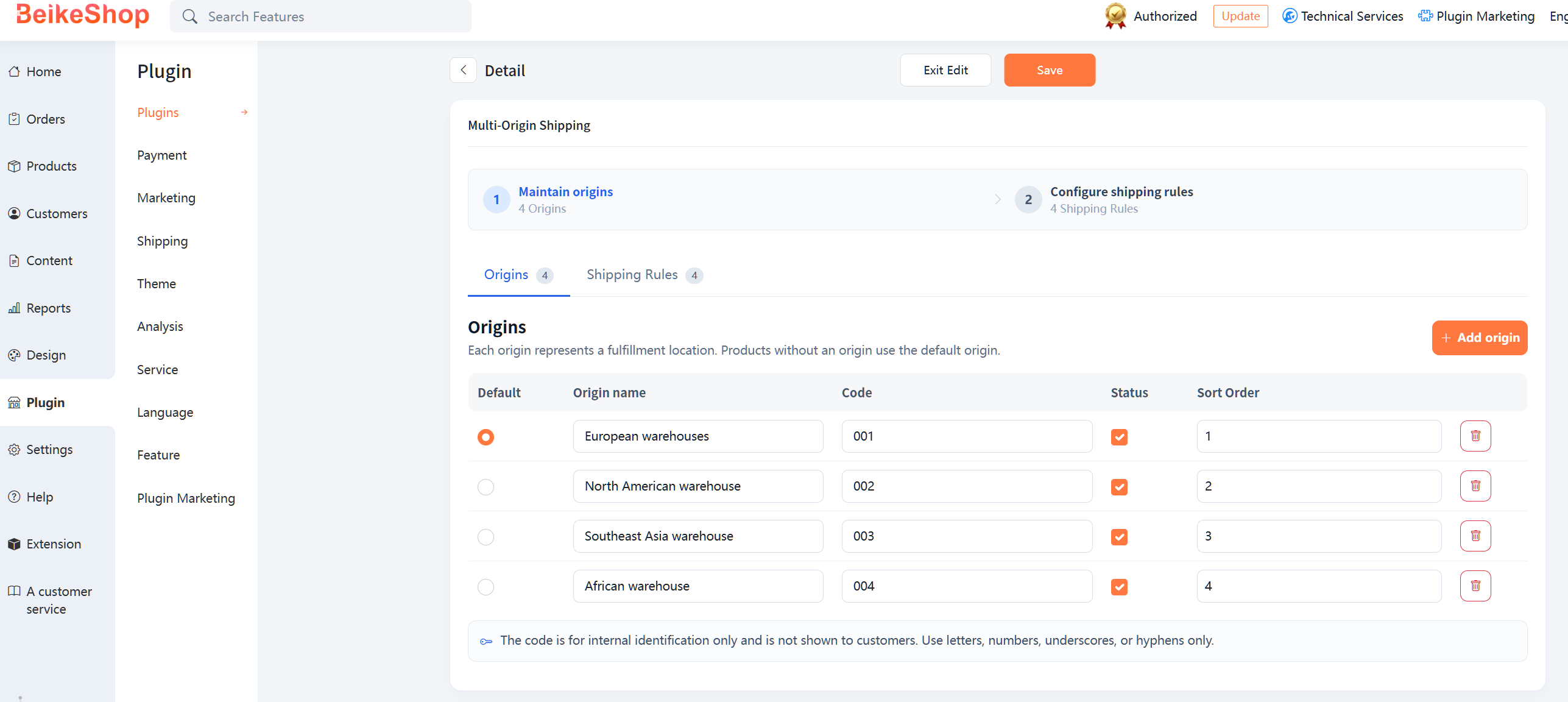
Merchants can manage regional warehouses such as a Europe warehouse, North America warehouse, or Africa warehouse, and set a default shipping origin. A product can be assigned to a specific origin; products without an individual assignment automatically use the default origin. This helps prevent an unassigned origin from stopping the shipping method from appearing.
2. Configure Shipping Rules Around Real Operations
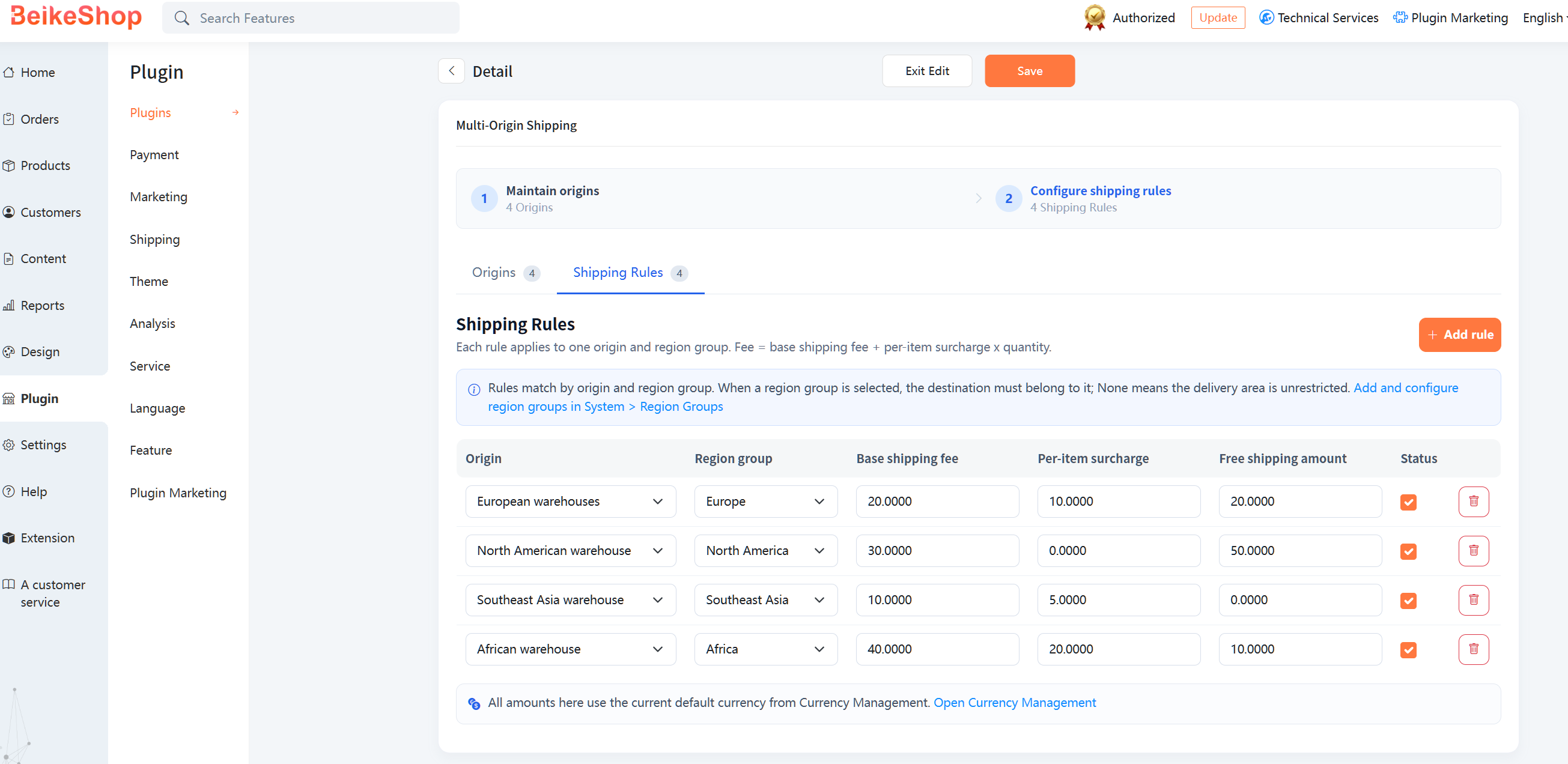
Each shipping rule is linked to a specific shipping origin and can be scoped by zone group, destination country, and state or province. Zone groups connect target markets with the rules for the relevant regional warehouse: for example, a Europe zone group can use the Europe warehouse rule, while a North America zone group can use the North America warehouse rule. Merchants can then set shipping strategies that reflect their actual logistics costs.
When more than one rule can match, the more specific matching conditions take precedence. This makes it possible to add differentiated rules on top of broad baseline coverage.
3. Set a Base Rate, Per-Item Surcharge, and Free-Shipping Threshold
For every shipping origin, the plugin supports:
- Base rate: the starting shipping charge for that origin's order group;
- Per-item surcharge: the additional charge for each extra item from the same origin;
- Free-shipping threshold: the order-subtotal threshold at which that origin's shipping charge becomes 0.
This supports everyday shipping for different markets as well as free-shipping promotions, multi-item orders, and different logistics cost structures.
4. Calculate Multi-Origin Orders by Group, Then Combine the Total
When an order contains products from multiple shipping origins, the plugin automatically:
- Groups products by shipping origin;
- Matches the applicable zone group, country, or state/province rule for each group;
- Calculates shipping for each origin group separately;
- Combines the amounts into the order's total shipping charge.
Customers see one Multi-Origin Shipping option at checkout. The system calculates each actual shipping origin first, then combines the result into the order shipping fee, instead of applying one rough rule to the costs of different regional warehouses.
Complete the Setup in Four Steps
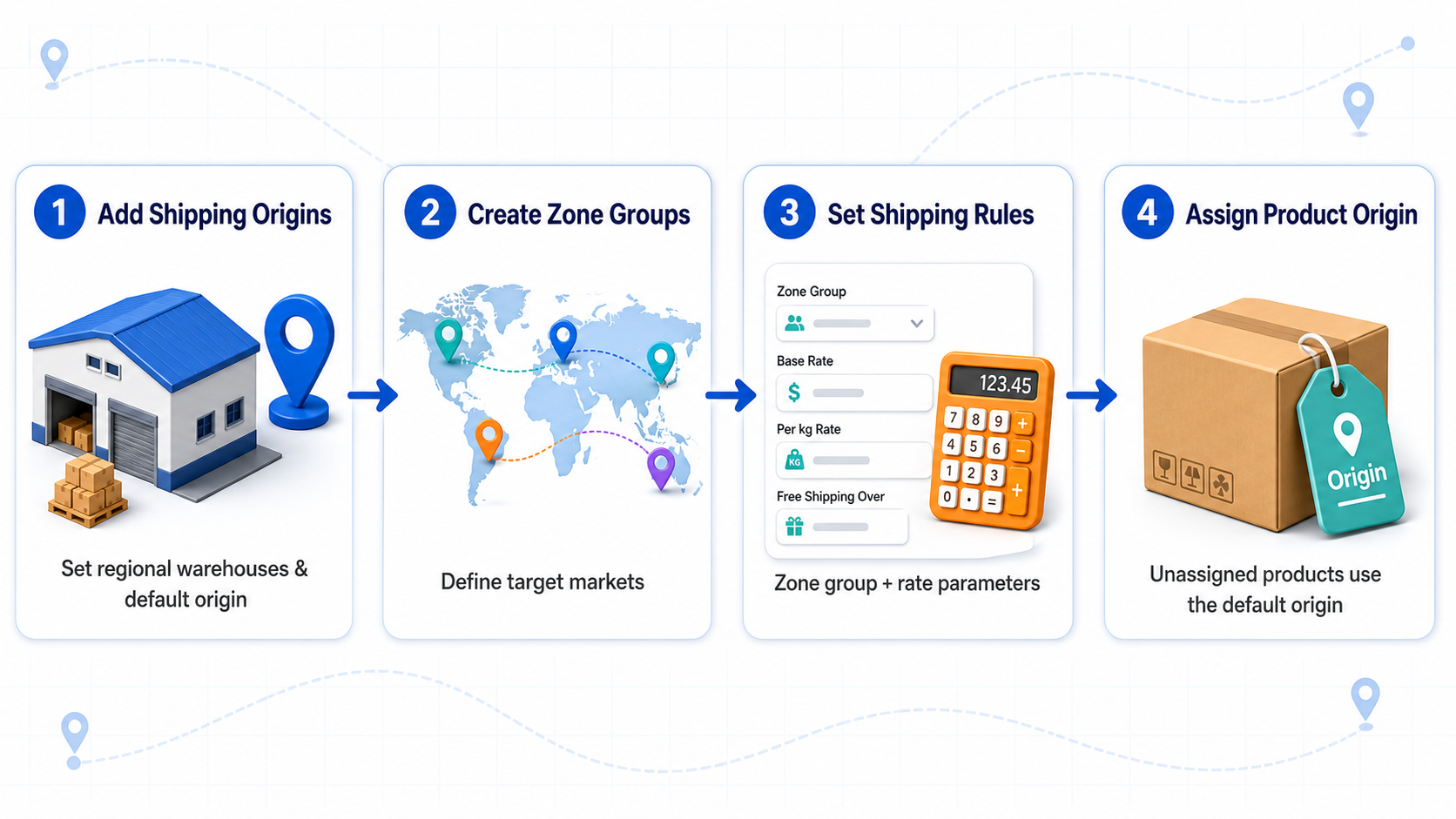
Multi-Origin Shipping starts by establishing the regional warehouses that actually fulfil orders, then linking target markets, warehouses, and rate rules:
- Add shipping origins: Go to Plugin Management → Multi-Origin Shipping → Settings, add and enable shipping origins such as Europe or North America warehouses, then choose a default origin.
- Create zone groups: In the BeikeShop admin panel, create zone groups to define the target markets or destination areas covered by each shipping rule.
- Set shipping rules: Choose the applicable zone group for each origin, then set the base rate, per-item surcharge, and free-shipping threshold. Destination countries and states or provinces can be further specified when needed.
- Assign a product origin: Select the appropriate origin in the product details. Products without an explicit assignment use the default origin.
The effective configuration is the combination of shipping origin + zone group (optionally combined with country and state/province) + shipping rule. When a customer's address matches a zone group, the system calculates shipping with the rule for the corresponding regional warehouse.
Every shipping origin that participates in fulfilment needs an enabled rule that can match the customer's address. If an origin has no valid matching rule, Multi-Origin Shipping will not appear at checkout.
Make Shipping Cost Calculations More Accurate for Multi-Region Fulfilment
For cross-border operations, logistics-cost differences between regional warehouses in Europe, North America, Africa, and other markets directly affect order margin and the customer experience. Multi-Origin Shipping brings shipping-origin management, target-market zone groups, and order-rate calculations together, helping merchants configure delivery rules around their real fulfilment setup.
Whether you already run a cross-border independent store or are expanding into multiple overseas and regional warehouses, Multi-Origin Shipping gives your BeikeShop store a more accurate way to calculate shipping across multiple origins.
👉 Explore the Multi-Origin Shipping plugin
Welcome to contact us! Email: marketing@guangda.work
Click the link to learn about the product: https://beikeshop.com/
All rights reserved. Reprint must indicate the source!