


Laravel E-commerce in 2026: Bagisto vs. BeikeShop vs. Aimeos—Which is Right for You?

BeikeShop Official Website: beikeshop.com
BeikeShop is a premier open-source e-commerce system built on the Laravel framework. Specifically designed for cross-border trade, it offers a fully customizable, multi-language, and multi-currency solution for businesses looking to scale their independent global storefronts.
If you're a PHP developer or part of a team evaluating an open-source e-commerce system, "Laravel e-commerce framework" is a keyword you can't avoid.
Thanks to Laravel's elegant architecture and massive ecosystem, several outstanding open-source e-commerce projects have emerged in recent years. The three most representative ones — Bagisto, BeikeShop, and Aimeos — have each taken a distinctly different technical path.
They all work. But they excel in completely different scenarios.
In this article, I'll provide a comprehensive, objective comparison across six dimensions: installation, plugin ecosystem, multi-language support, AI features, multi-store management, and community/docs — to help you choose based on your actual needs.
1. Meet the Contenders
Before diving into details, here's a quick overview of their positioning:
| Dimension | Bagisto | BeikeShop | Aimeos |
|---|---|---|---|
| License | MIT | OSL 3.0 | LGPL/MIT dual |
| Tech Stack | Laravel + Vue.js | Laravel + Blade/Vue.js | Laravel (core) |
| Positioning | General-purpose e-commerce | Cross-border e-commerce | High-performance enterprise |
| Learning Curve | ⭐⭐ Medium | ⭐ Easy | ⭐⭐⭐ Steep |
| Chinese Support | Basic language pack | Native Chinese ecosystem | Limited |
| AI Features | None built-in | Built-in AI Agent system | None built-in |
| Multi-Store | Basic multi-store | Native multi-store management | Multi-site/multi-channel |
| GitHub Stars | ~5,000+ | ~2,000+ | ~4,000+ |
All three are open-source and free. The core quality is solid across the board. The real differences lie in their design philosophy and target scenarios.
2. Installation: Who Gets You Running Fastest?
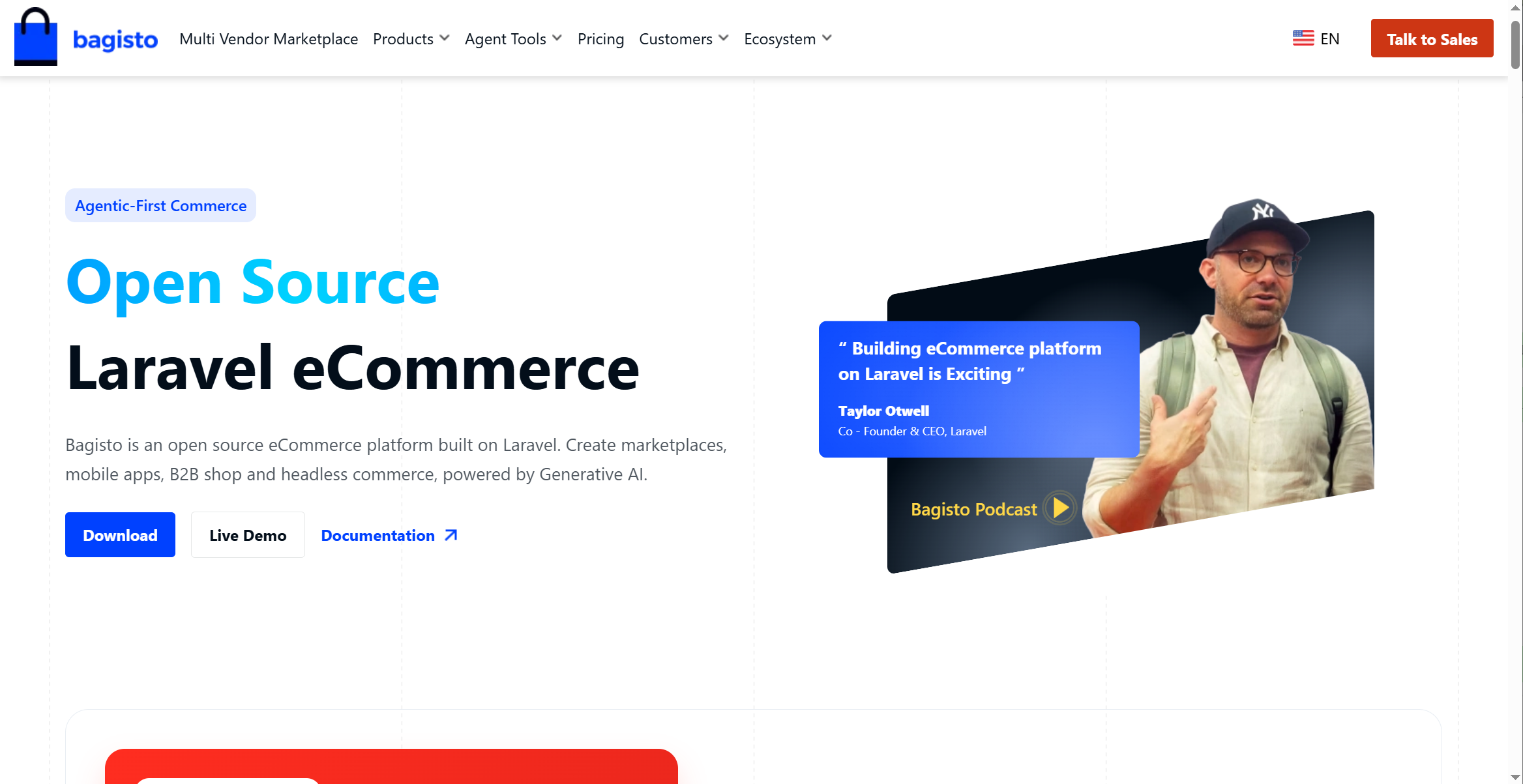
Bagisto
The installation follows a standard flow: composer create-project → configure database → php artisan bagisto:install. When everything goes smoothly, you're up in 10-15 minutes.
However, Bagisto has quite a few dependencies, and you may run into front-end asset compilation issues (npm install && npm run production), especially on Windows.
BeikeShop
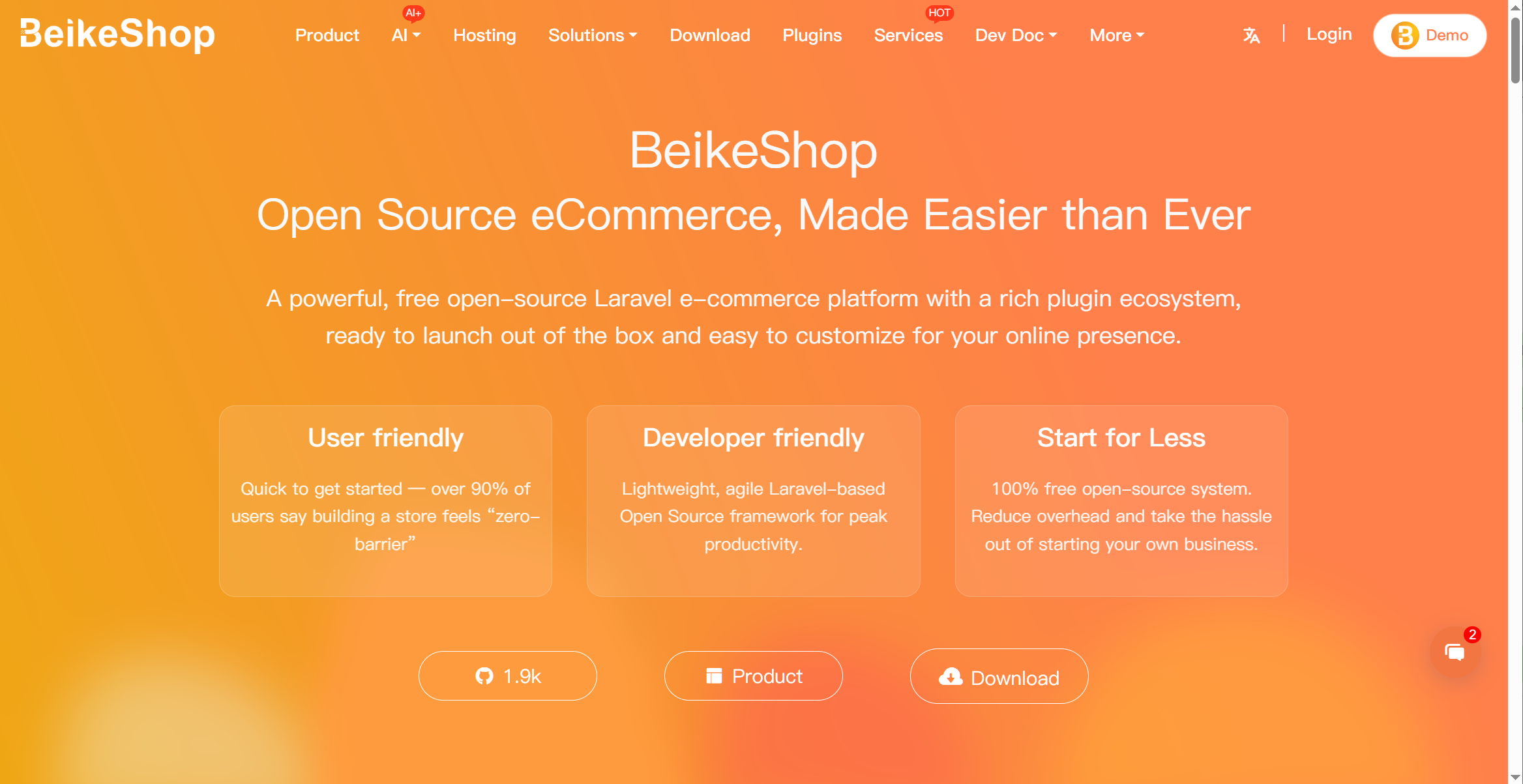
BeikeShop is the fastest to install among the three. The official team provides a Baota 'One-Click Deployment' service. After installing Baota, simply go to the Software Store's One-Click Deployment module, find the BeikeShop app, and click deploy—you’ll be in the admin dashboard within 5 minutes.
For sellers who aren't familiar with command lines, this experience is clearly much more user-friendly.
Aimeos
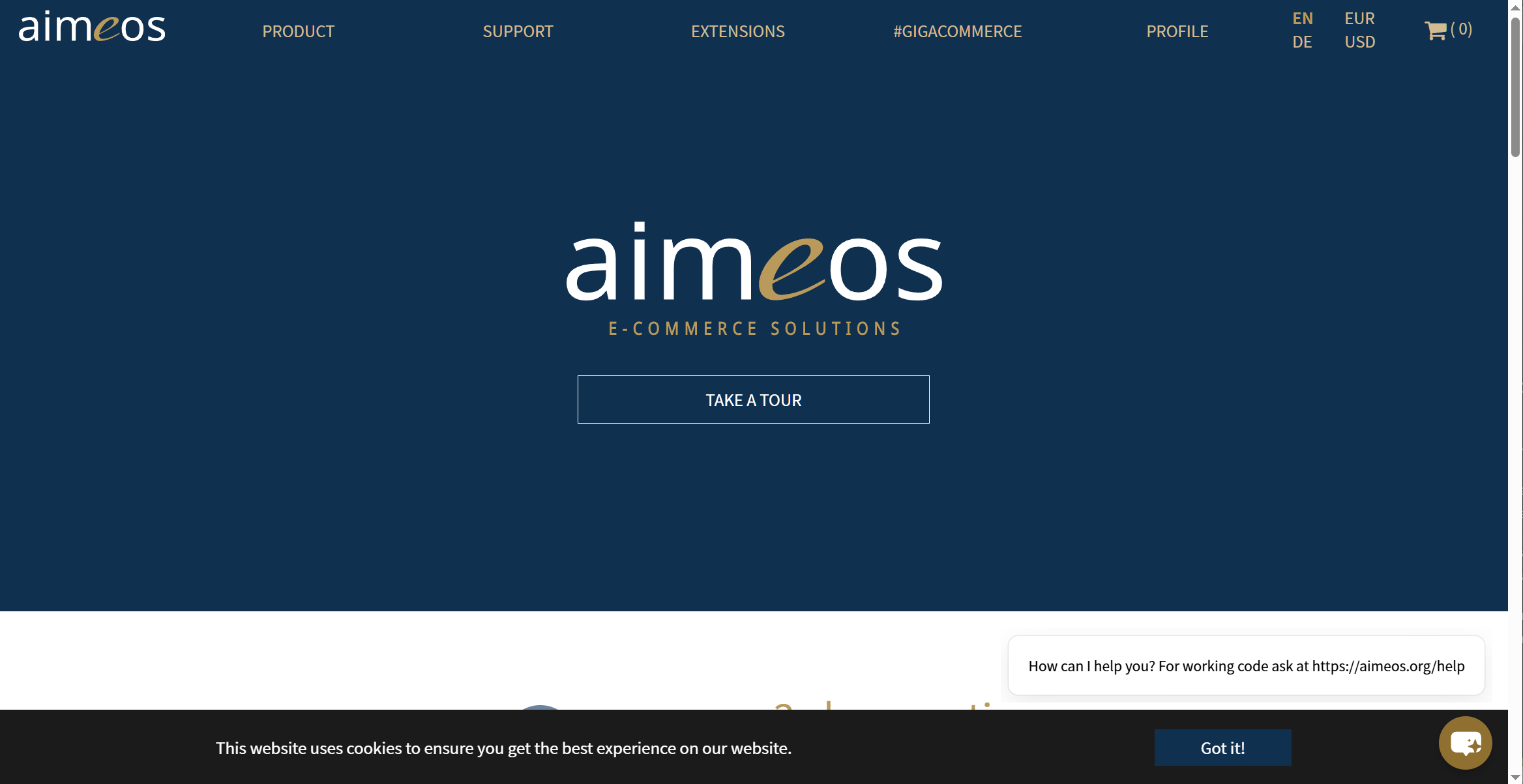
Aimeos itself isn't hard to install, but it comes with many configuration options. Since it's positioned as a high-performance enterprise solution, you'll need to set up caching strategies, search engines (Elasticsearch), and queue systems. Initial deployment and tuning require real ops experience.
Takeaway: If speed-to-running-store matters most: BeikeShop > Bagisto > Aimeos. If you're an ops expert who needs fine-grained configuration, Aimeos's flexibility is an advantage.
3. Plugin Ecosystem: Built-in vs. Add-on Heavy?
This is where the three systems diverge most sharply.
Bagisto
Bagisto's marketplace offers dozens of paid extensions ranging from $49 to $199. Core features (multi-store, multi-language, multi-currency) are built-in, but advanced capabilities require purchases: multi-vendor marketplace, POS, booking system, LMS, and more.
It follows the classic "free core + paid extensions" model.
BeikeShop
BeikeShop takes a different approach — core features are built-in as much as possible. Payments, logistics, multi-language, multi-currency, customer management, and SEO tools all work out of the box without additional plugins.
The plugin marketplace leans toward "enhancement" rather than "gap-filling": AI order analytics, AI product video generation, product sourcing, ERP integration. Plugin pricing is also relatively affordable (most in the ¥59-¥299 range).
Most notably, BeikeShop has integrated an AI Agent system natively — something neither of the other two frameworks currently offers (more on this below).
Aimeos
Aimeos uses a "component-based" extension model. The core engine is deliberately lean, with most business functionality delivered through Aimeos extension packages. It supports 100+ payment gateways, multi-warehouse, subscription/recurring billing, and other advanced features — but configuration complexity scales accordingly.
Takeaway: For "works out of the box, less tinkering" → BeikeShop. For rich third-party integrations → Aimeos. For pay-as-you-need extensions → Bagisto.
4. Multi-Language Support: Who's Better for Cross-Border?
If you're selling internationally, multi-language and multi-currency are non-negotiable.
Bagisto
Supports multi-language and multi-currency with major language packs included. However, the Chinese language pack quality is average — some translations are incomplete and require manual completion. If your target market includes Chinese users, expect extra effort.
BeikeShop
BeikeShop has the deepest internationalization:
- Native Chinese ecosystem — documentation, community, plugin descriptions all in Chinese
- 80+ language packs covering major markets
- AI-powered auto-translation — one-click product information translation across languages
- Multi-currency switching with auto-updated exchange rates
For Chinese cross-border sellers, BeikeShop has the lowest barrier — when you run into issues, you can read Chinese docs and ask questions in the Chinese community.
Aimeos
Multi-language capabilities are solid but more technical. Language packs require manual configuration, and there's no "translate on click" feature. Best suited for teams with technical support staff.
Takeaway: Chinese cross-border sellers should choose BeikeShop (Chinese ecosystem + AI translation). International technical teams can go with Aimeos. Bagisto's multi-language is adequate but not outstanding.
5. AI Features: The New Battleground in 2026
AI has permeated every aspect of e-commerce operations. Here, the gap between the three systems is striking.
Bagisto & Aimeos
Neither currently offers built-in AI capabilities. If you need AI features (intelligent customer service, product recommendations, data analytics), you'll need to integrate third-party APIs or build custom extensions.
BeikeShop
BeikeShop is currently the only open-source Laravel e-commerce framework with a natively integrated AI Agent system:
- AI Order Analytics: Query sales data in natural language — "What were last week's sales?" "How has the conversion rate changed?" — and get instant answers
- AI Product Video Generation: Upload product images, and the AI automatically generates marketing short videos
- AI Article Management: Auto-generate SEO articles and multi-language content
- MCP SDK: Developers can extend additional AI capabilities through the BeikeShop MCP protocol
This isn't a superficial "ChatGPT API wrapper" — these are practical tools deeply integrated into the store operations workflow. For operations teams, this saves significant time on repetitive tasks.
Takeaway: For AI capabilities, BeikeShop is far ahead. The other two require custom development or third-party integration.
6. Multi-Store Management: Who Handles Multiple Sites Best?
If you manage multiple brands or markets, multi-store management is critical.
Bagisto
Supports managing multiple stores from a single admin panel, with each store having its own language, currency, and theme. But it remains at the "multi-store" level, lacking batch operations and unified management tools.
Aimeos
Multi-channel, multi-site architecture is Aimeos's strength. It supports fine-grained isolation by channel, warehouse, and region — but configuration complexity is also the highest.
BeikeShop
BeikeShop provides a dedicated multi-store management system:
- Unified management of multiple independent stores with subdomain/individual domain support
- Batch operations (products, orders, customers)
- Independent data per store with unified dashboard overview
- Ideal for "one team operating multiple brands/markets"
Takeaway: Lightweight multi-store → Bagisto. Fine-grained multi-channel → Aimeos. "All-in-one multi-store management" → BeikeShop.
7. Community & Documentation: How Fast Can You Find Answers?
Bagisto
Primarily English-speaking community with official forums and Discord. Documentation quality is good, but Chinese resources are limited. Stack Overflow presence is moderate.
BeikeShop
Most active Chinese community — official QQ groups,complete Chinese documentation. For domestic developers and sellers, getting help in Chinese means faster resolution.
English documentation is continuously improving, and the international user community is growing.
Aimeos
Has the most mature international community with the highest GitHub activity. Official documentation is thorough but technical, suited for experienced developers. Chinese resources are scarce.
Takeaway: Chinese users should choose BeikeShop (seamless Chinese support). English-speaking developers can go with Aimeos or Bagisto.
8. Summary Table
| Dimension | Bagisto | BeikeShop | Aimeos |
|---|---|---|---|
| Installation | Medium | Easy (one-click) | Complex (tuning required) |
| Plugin Ecosystem | Paid extensions | Core built-in + affordable plugins | Component-based |
| Multi-Language | Basic | 80+ packs + AI translation | Technical-level support |
| AI Features | None | Native AI Agent system | None |
| Multi-Store | Basic multi-store | Professional multi-store system | Multi-channel/multi-site |
| Chinese Ecosystem | Average | Native Chinese | Weak |
| Best For | Full-stack developers | Cross-border sellers / SMB teams | Enterprise tech teams |
| Time to Launch | 1-2 weeks | 1-3 days | 2-4 weeks |
9. How to Choose? Three Practical Scenarios
Scenario 1: Chinese seller building a cross-border e-commerce store → Choose BeikeShop. Complete Chinese ecosystem, AI translation saves time, convenient multi-store management, fastest to get started.
Scenario 2: Full-stack developer taking on client projects, needs a flexible e-commerce solution → Choose Bagisto. MIT license has no restrictions, Vue.js frontend is easy to customize, marketplace lets you buy extensions as needed.
Scenario 3: Large enterprise needing high-performance, multi-channel e-commerce architecture → Choose Aimeos. Billion-level product capacity, deep Elasticsearch integration, multi-warehouse multi-channel support. But you'll need a dedicated ops team.
Final Thoughts
No framework is "the best" across every dimension — what matters is matching your actual needs.
If you're a cross-border seller or small-to-medium team that values efficiency and doesn't want to spend too much time on technical setup, BeikeShop currently offers the best overall experience in the Laravel ecosystem — fast installation, comprehensive features, AI-powered, and Chinese-friendly.
If you prioritize technical freedom and community size, Bagisto and Aimeos each have their own strengths.
We recommend scoring yourself against the dimensions above based on your team size, technical capability, and target market — then choosing the solution that fits best.
Welcome to contact us! Email: marketing@guangda.work
Click the link to learn about the product: https://beikeshop.com/
All rights reserved. Reprint must indicate the source!